

Yes, smoking can harm you—but who can really resist the scent of tobacco in a perfume?
Tobacco, like its botanical cousins (tomato, eggplant, bell pepper, potato, and even some poisonous ones like datura and henbane), came to Europe from the discovery of the New World.
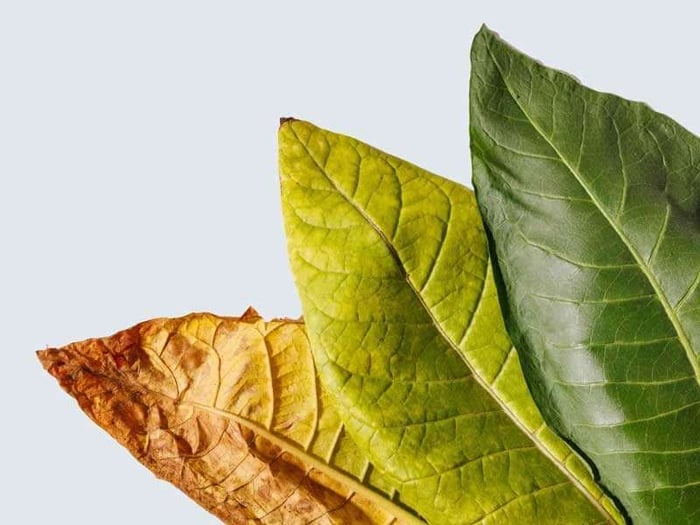
Dried leaves hold about 1–5% nicotine, which is the active ingredient in smoking products. But beyond nicotine, these leaves are packed with chemicals that may have antidepressant effects.
What makes this plant truly special is its complexity. Its smoke has an almost spiritual, mind-altering quality. That’s why many indigenous tribes in the Americas used it in shamanic rituals—to tap into altered states of consciousness. Of course, that side of tobacco has nothing to do with modern perfumes, since the natural extracts used in fragrances don’t contain nicotine or other alkaloids.
Over the centuries, people have cultivated many kinds of tobacco. The most common is Nicotiana tabacum. Every year, more than 7 million tons are grown worldwide, most of it used in cigarettes and other related products. China leads the global market, followed by India and Brazil. The United States produces around 250,000 tons each year.
In perfumery, tobacco absolute is made from dried, fermented leaves. The process is pretty standard: the leaves are first extracted with solvents like petroleum ether or hexane. The result is a concrete, which is then refined using ethanol.
Virginia tobacco is most commonly used to create the absolute. Other varieties include Burley, Turkish, and Latakia. Latakia, grown in Syria and Cyprus, is fire-cured after drying, giving it a distinctive, smoky character. This is the very variety perfumer Christopher Sheldrake aimed to recreate in Fumerie Turque, a fragrance crafted under Serge Lutens' direction.
When diluted, the extract reveals its signature scent: warm, sweet, slightly woody, and herbal. There are hints of hay, dried fruit, tea, honey, flowers, chocolate, leather, and even moss.
Tobacco absolute isn’t just for tobacco-focused fragrances. In small amounts, it can add depth to aldehydic scents, a dry edge to fougères, and character to oriental compositions. It blends beautifully with notes like sandalwood, castoreum, labdanum, vetiver, sage, cedar, and violet-iris.
There’s also liatris absolute, a natural material that smells a bit like tobacco. It comes from a plant in the aster family and gives off a sweet, herbal-coumarin scent with vanilla undertones. When mixed with musks, heliotropine, ionones, and cinnamon, liatris can create a powdery, dry, and interesting accord. Liatris also works well with oakmoss, labdanum, incense, lavender, cloves, patchouli, salicylates, and more.
There are tons of tobacco-inspired perfumes out there—so many, in fact, that listing all of them would be pointless.
One often-mentioned classic is Tabac Blond by Caron. Though known as a tobacco fragrance, it leans more toward leather and vanilla with touches of iris and cloves.
Remember Cigar by Rémy Latour? That one was basically a solo act: pure pipe, front and center.
Another standout is Jasmin et Cigarette by État Libre d’Orange. This one nailed the smell of a wet cigarette pack—oddly realistic, and strangely wearable.
Still, the true game-changer was "Tobacco Vanille", created by Olivier Gillotin for Tom Ford in 2007. It set a new standard for how it could be used in fragrance. A true milestone that brought perfumes to follow such as BDK's Tabac Rose and Tabac Nomade by Houbigant.